Your analytics stack is dying. Here's what's going to replace it
The monolithic martech stack is collapsing. An open source, warehouse-first intelligence platform is cheaper, more honest, and actually yours.
Steven Elliott•10 Mar 2026

As of the time of writing, there are over 2 million podcasts and more than 48 million episodes, with nearly three out of four listeners (in the US) tuning in to learn new things (source). The Measure Pod is but a drop in the podcast ocean.
Why start one, right? Everyone and their nan has a podcast now.
True. But we’re in the market of knowing as much as we possibly can about analytics and sharing that with like-minded people. Rather than fussing over LinkedIn reactions, or newsletter subscriber numbers (please subscribe by the way ;) ), it seems an obvious medium to be able to communicate directly with the people. Our people. Analytics obsessives.
Anyway, we talk about this sort of thing all the time, it's just not recorded. And generally with beer in hand, which is not untrue of the podcast…
We’re in the business of doing clever stuff with data that we find fun and interesting. It’s not the kind of thing your family and friends will ever fully understand, so why not get the buzz from each other in this weird industry we’re in. That's where The Measure Pod come in.
So right at the beginning of this venture, we had a choice. Pay a podcast hosting provider or self-host. Well, for The Measure Pod we went down the free route because who wouldn’t at first, right?
Our website is built on WordPress and we found a great plugin called Seriously Simple Podcasting which fits the bill. It sets up and manages an RSS feed as well as offering a neat workflow to add new episodes, just like a blog post. All very familiar territory, great!
However, the reason you may consider paying a hosting platform to do this all for you is that they manage all the integrations with all the podcast networks like Apple Podcasts, Google Podcasts, Spotify, Amazon, Pocket Casts, etc.
Not having that luxury, we had to go to each of these platforms individually and add our RSS feed. This, in and of itself, is not too painful, but some networks take up to 3 days to add them to their players (looking at you Google Podcasts). So there goes our launch day with episode number 1…
Once all that initial leg work is done there’s no need to do it again for each episode, so it’s pretty straight forward after that. The official ‘launch’ is now the following week with episode number 2!
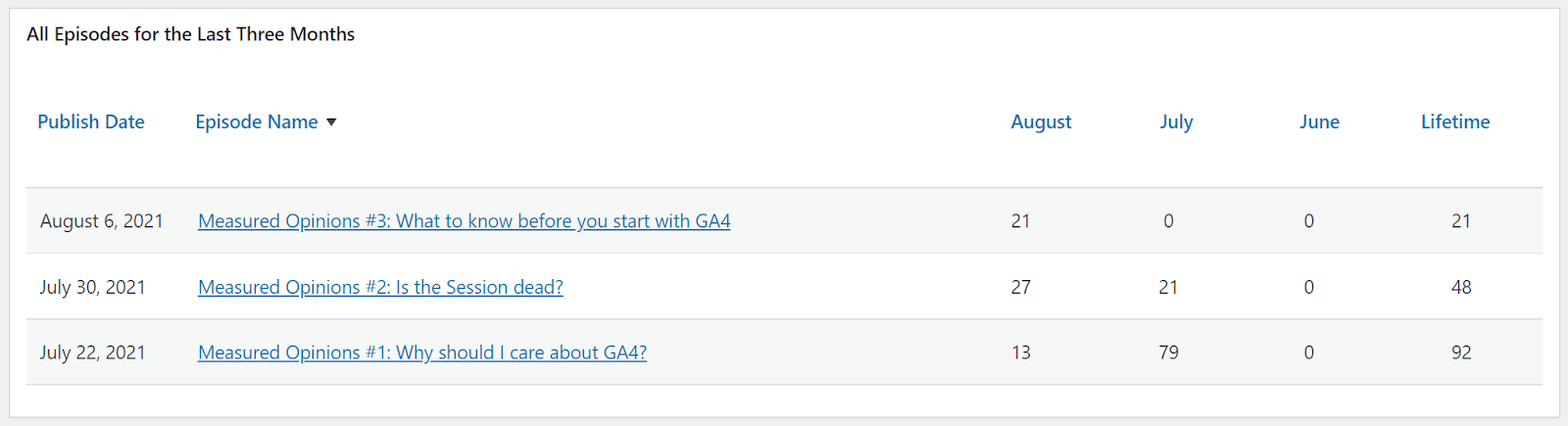
As of the time of writing, we have 3 episodes of The Measure Pod out which can be streamed from our website, or on most podcast players. If we missed any, let me know by emailing me on daniel@measurelab.co.uk and I’ll add it in. They are:
Actually recording the conversations between myself and Dara Fitzgerald is the easy and fun part. What’s hard is figuring out what you want to say, and then saying it.
Preparation is key, write down everything beforehand. Well not everything, you don’t want to read from a script. But you do want to figure out the key points you want to get across and not stray too far from the topic at hand.
In case you were wondering, we are recording over Zoom with a Soundtronics Podcast Pro microphone each. And I generally have a beer on the go, much to Dara’s jealousy!
So the fun part is over, now it’s time to edit. Not that it isn’t fun, but it can be a drag hearing your own voice over and over and over and over (okay we get it...) again. I genuinely couldn’t have done this without a magical tool called Descript. It turns audio files into a transcript, which you then edit just like a Google Doc or Word Doc. It does all the fancy actual audio editing behind the scenes, I just fix typos and remove text!
Also, the first few recordings are weird and feel strange. We’ve been on Zoom for well over a year now, but it feels different. It passes, but we do have 1.5 episodes in the trash that will never see the light of day. Just us finding our feet. Well, voice.
Launching The Measure Pod was easy, just click publish in WordPress. The RSS feed does its magic, and all the podcast networks see the new episode and add it to their libraries, pinging anyone who’s subscribed. Then the fun can start - looking at the data!
The WordPress plugin gives an almost real-time view of the data, but only tracks ‘Listens’ and there is no way to get the data out by downloading or via an API from what I can see. Very limiting outside of an “oh, that’s cool” conversation.
However, we also implemented a free podcast analytics tool called Podtrac on our RSS feed, which offers a step-up in terms of data collection and access. It captures the listener’s podcast player as well as geographic information. And some other useful stats such as audience size (unique listeners).
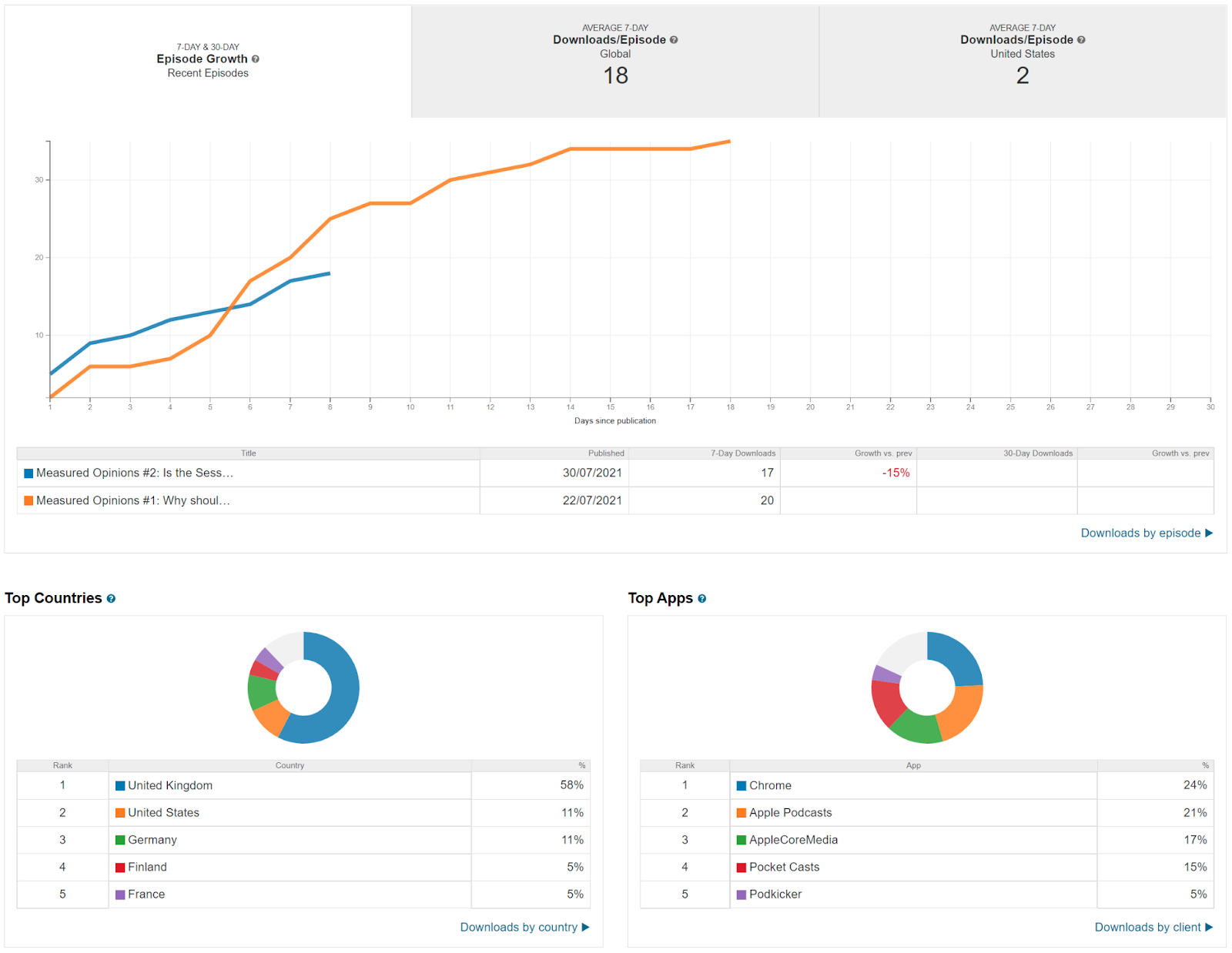
It still feels pretty basic compared to what I’m used to in terms of Google Analytics (especially Google Analytics 4), but that’s what I’m most familiar with.
Maybe we’ll have a go at building our own GCP-based analytics tracking solution. I mean how hard can it really be?!
Famous last words...
The monolithic martech stack is collapsing. An open source, warehouse-first intelligence platform is cheaper, more honest, and actually yours.
UK universities face a deficit crisis. Student Recruitment Intelligence can transform Clearing from chaos to precision.
At the start of the year, if you’d asked us whether Measurelab would be standing shoulder to shoulder with Europe’s biggest consultancies by September, we would've been surprised. Not because we don't believe in ourselves, but because these things feel so distant - until suddenly, they’re not. So, here it is: we’ve been awarded the Marketing Analytics Services Partner Specialisation in Google Cloud Partner Advantage. What’s the big deal? In Google’s own words (with the obligatory Zs): “Spec