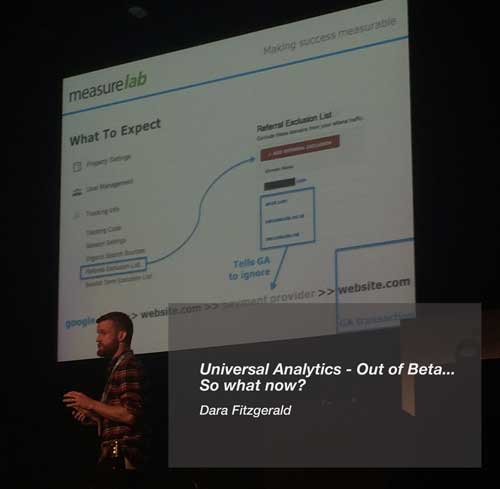
Universal Analytics is out of Beta... So What Now? #brightonseo talk slides

Mark Rochefort25 April 20142 min read
Universal Analytics is out of Beta... So What Now? #brightonseo talk slides
			Yesterday, at BrightonSEO, <a href="http://measurelab2.wpengine.com/blog/author/dara/">Dara</a>&nbsp;(our Analytics Director) gave a talk on the state of Universal Analytics now that it is out of beta. It was well received by all (see Twitter feed below). Here's the slides (on <a href="http://www.slideshare.net/darafitzgerald/universal-analytics-out-of-beta-brightonseo" target="_blank" rel="noopener noreferrer">Slideshare</a>) from the presentation in case you missed it or wanted to view them again:
After about 18 months in beta, Universal Analytics is now fully available with complete feature parity compared to Classic GA. This presentation runs through the current state of play with Universal, the key benefits to us as marketers and practical examples of how to start making the most of the new tracking library.

Twitter feed from #BrightonSEO


Ready to talk?

Book a free discovery call to discuss how we can help with your data and analytics challenges.

Check your setup for free

Our instant analytics audit scans your GA4 configuration and flags what's missing, broken or misconfigured.


Suggested content

BigQuery Tips: When your query is technically correct but BigQuery won't run it

There is a particular kind of frustration that comes from staring at a query you know is correct and watching it fail. No syntax error. No logic problem. Just a wall. We hit two of them on the same project. What we were building The job was to migrate ga4_daily_snapshot for a large enterprise client from a BigQuery scheduled query into a proper Dataform pipeline. The scheduled query had been added to over time until it was too large to maintain with any confidence. Moving it to Dataform w

Katie Kaczmarek17 Aug 2026

BigQuery Tips: The subquery in your WHERE clause that's scanning your entire table

There is a pattern that appears in a lot of BigQuery pipelines and looks completely reasonable. You have a control table that stores the latest processed date. Rather than hardcoding a date into your query, you pull it dynamically: SELECT * FROM `project.dataset.events` WHERE event_date = ( SELECT latest FROM `project.dataset.control_table` ); The query returns the right results. The logic is clean. And if your events table is large and date-partitioned, you might be scanning the entire

Katie Kaczmarek13 Aug 2026