The problem with Agentic Analytics
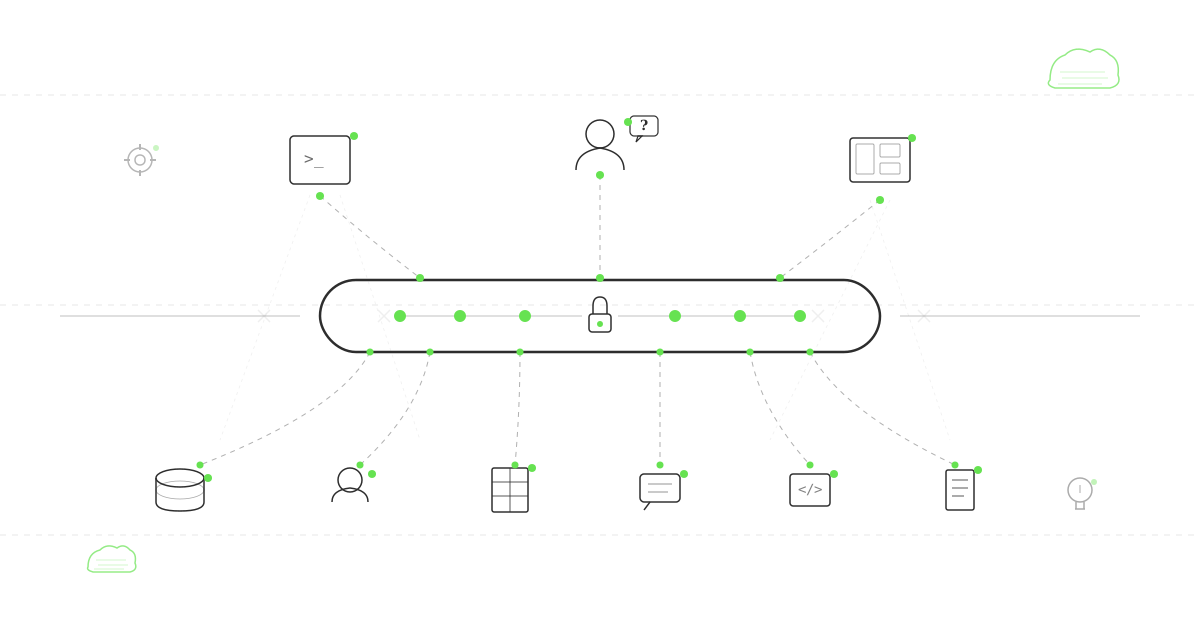
An AI agent will answer any question about your data, confidently and often wrongly. Agentic analytics works only on a governed semantic layer. Here is why.
Mark Rochefort-25 Jun 2026
Data analysis techniques, statistical methods, and analytical insights (135 posts)
An AI agent will answer any question about your data, confidently and often wrongly. Agentic analytics works only on a governed semantic layer. Here is why.

UK universities face a deficit crisis. Student Recruitment Intelligence can transform Clearing from chaos to precision.

AI expert Daniel Hulme, founder of Satalia, shares his journey from UCL PhD to entrepreneur, discussing AI, consciousness & deep tech.
Dara and Matthew chat with Juliana Jackson on her journey, product mindset, and how AI is shaping modern analytics.
Yali Sassoon joins The Measure Pod to discuss Snowplow’s growth, AI innovation, data challenges, and the future of user experience.
Johan van de Werken joins The Measure Pod to discuss GA4Dataform, BigQuery, and the future of analytics engineering and automation.
In this episode of The Measure Pod, Dara and Matthew sit down with Mark Edmondson, AI Engineer, founder of Sunholo, Aitana, and board member at 8-bit-sheep.
In this episode of The Measure Pod, Dara and Matthew sit down with Brian Clifton, the former Head of Web Analytics at Google (EMEA), author, and founder of Verified-Data.com and Advisor to Piwik PRO.
In this episode of The Measure Pod, Dara and Matthew sit down with Gunnar Griese from 8-bit-sheep to discuss MCPs and their growing role in digital analytics.
In this episode of The Measure Pod, Dara and Matt welcome Josele Perez, co-founder of Trackingplan, to dive into the evolving challenges and opportunities in data collection.
In this episode of The Measure Pod, Dara and Matt sit down with Roman Petrochenkov, a seasoned marketing analytics leader with deep expertise in data strategy and measurement.
In this episode of The Measure Pod, Dara and Matt are joined by Chad Sanderson from Gable.ai, a seasoned expert in the data space with a diverse background ranging from journalism to data science.
In this episode of The Measure Pod, Dara and Matt are joined by István Mészáros, founder and CEO of Mitzu - a company who have built a warehouse-native product analytics solution.
In this episode of The Measure Pod, Dara and Mattew are joined by Antony Mayfield to talk about what 15+ years of digital transformation work actually looks like and how it’s changed.
In this episode of The Measure Pod, Dara and Matt are joined by Verónica Delgado-Benito to chat through her journey from molecular biology PhD to data analyst at Springer Nature.
In this episode of The Measure Pod, Dara and Matt dive into a whole mix of marketing analytics news and musings. From new BigQuery features and GA4 updates to ChatGPT integrations and data quality best practices.
You’ve probably heard that AI is coming to make our lives easier, especially in tools like BigQuery. But here’s the thing: AI isn't magic. If you want it to be accurate and useful, you need to set it up for success. One of the best ways to do that? Improve the metadata in your BigQuery warehouse. Metadata is like the index or contents page in a book, it quickly tells you exactly what’s inside and where to find it. Creating clear metadata means AI can more easily understand your data warehouse
In our recent engagement with a client, we went on a journey to transform their data pipelines, tackling inefficiencies in performance and cost within their Google Cloud BigQuery environment. Our efforts culminated in a comprehensive optimisation strategy that used Dataform, improved SQL practices, and implemented tailored solutions for significant performance gains and cost savings. Here’s a deep dive into the highlights of our project. Identifying inefficiencies in BigQuery workflows We beg
In this episode of The Measure Pod, Dara and Matthew take the reins and dive into the biggest takeaways from Google Cloud Next 2025.
In this week's episode of The Measure Pod, Dan and Bhav are joined by Jorge Ahumada Garcia from Coppel, one of Mexico’s largest retailers and banks.
In this week's episode of The Measure Pod, Dan and Bhav are joined by Egor Howell, a rising voice in data science and content creation.
In this episode of The Measure Pod, Dan and Bhav are joined by Ole Bossdorf, an analytics expert at venture capital firm Project A, which boasts a portfolio of over 120 companies.
In this week's episode of The Measure Pod, Dan and Bhav are joined by János Moldvay from Funnel to dive into the intricacies of Marketing Mix Modeling (MMM), Multi-Touch Attribution (MTA), and the future of marketing measurement.
In this week's episode of The Measure Pod, Dan and Bhav dive into the intricate world of product analytics.
Setting up a Dataform repository can be challenging without the right steps. Whether you’re new to Dataform or want to optimise your workflow, this guide will show you how to seamlessly connect it with GitHub and Google Cloud (GC). What is Dataform and why use it? Dataform is a powerful tool for managing version-controlled SQL workflows in a collaborative way. GC incorporates BigQuery and GitHub integration, providing an efficient way to organise and maintain complex data pipelines. Let’s bre
Offline event data import in Google Analytics 4 allows you to upload event data that was acquired outside of your website or app, such as in-store purchases, contact centre interactions, or CRM data. This can be critical for businesses seeking to bridge the gap between online and offline user actions, resulting in a more complete picture of customer behaviour. How to import offline event data into GA4 You can upload event data into GA4 through a process called Data Import. This can be done ma
Learn how Dataform can solve the challenges of outdated SQL, improving data reliability, scalability, and efficiency for marketing teams.
In this week's episode of The Measure Pod, Dan and Bhav had the pleasure of speaking with Gabor Mester, a seasoned analytics professional who has spent over 13 years at Sony, specifically with PlayStation.
In this week's episode of The Measure Pod, Dan and Bhav reflect on insights gained from MeasureCamp London, and dive into the thought-provoking topic of "the death of accuracy."
In this week's episode of The Measure Pod, Dan and Bhav welcome back Steen Rasmussen from IIH Nordic, a previous guest known for his insightful perspectives.
In this week's episode of The Measure Pod, Dan and Bhav explore the concept of what a senior analyst looks like and how to reach that level in your career.
In this week's episode of The Measure Pod, Dan and Bhav are joined by Juliana Jackson, who has a diverse background in sales, product, training, and analytics.
The Springer Nature Group is an academic publishing company, with brands dating back to 1842, that advances scientific discovery by publishing robust and insightful research, supporting the development of new areas of knowledge, making ideas and information accessible around the world, and leading the way on open access. The challenge The sales and marketing teams depended on incomplete data, which didn’t capture the entire customer journey due to different systems in use. Transactions and re
In this episode of Behind the Cloud, Matthew delves into the world of generative AI in the Google Cloud Platform, highlighting how Google has integrated generative AI features into its various services. Matthew explores the ways generative AI can be used within BigQuery, such as generating SQL queries and Python notebooks! Video transcript Introduction to Generative AI in Google Cloud [00:00:00] Matt: Hello and welcome to another episode of Behind the Cloud. Uh, today we’re going to cover g
In this week's episode of The Measure Pod, Dan and Bhav are joined by Ken Williams from DiveTeam to discuss modern marketing and measurement strategy.
In this week's episode of The Measure Pod, Dan and Bhav discuss the concept of treating data as a journey, not just a destination.
Opening scene: A large meeting room at BigCorp. A systems architecture diagram with lots of boxes and arrows flowing from left to right fills a large whiteboard. Kelvin joins Jan (marketing director) and Joe (head of data) at the table, earnest expression, hands clasped in front of him. Kelvin: So, Jan, Joe, tell me a bit about the history of the warehouse. Joe: Well, going way back, it was originally an on-prem system, which was replaced back in 2019 with an Oracle data warehouse as part of a
In this week's episode of The Measure Pod we spoke with Glenn Vanderlinden, co-founder of Human37. We spoke about CDP implementations, and whether or not they are ROI positive.
In this week's episode of The Measure Pod we spoke with Gaurav Tiwari, ex-Meta, currently working as an Engineering Manager at Spotify.
In this week's episode of The Measure Pod we spoke with David Jayatillake, co-founder of Delphi and organiser of the London Analytics Meetup.
In this week's episode of The Measure Pod we spoke with Timo Dechau, a product manager and analyst with a unique perspective on event tracking.
In this week's episode of The Measure Pod we spoke with Tim Ceuppens, a creative thinker in the field of data and marketing.
In this episode of Behind the Cloud, Matthew aims to answer the question: what are the Google Cloud Platform tools of the marketing analytics trade? And more specifically, what are the tools that you should care about in Google Cloud. For a more in-depth write up on Google Cloud tools, check out Matt’s blog post. Video transcript [00:00:00] Matt: Hello and welcome to today’s episode of Behind the Cloud. We’re going to try and answer the question, what are the GCP tools of the marketing analyt
In this week's episode of The Measure Pod we spoke with Matt Jones, a Technical SEO freelancer, and creator of the Freelancing Friends community and podcast.
In this week's episode of The Measure Pod we welcomed Rick Dronkers back from Data to Value. We talked about all things CDP and GA4.
In this week's episode of The Measure Pod, it's our Christmas special! Dan and Bhav discuss the highs and lows of the past year, and predictions for 2024.
In this week's episode of The Measure Pod we spoke to Adam Greco from Amplitude. We talked specifically around warehouse native analytics, and whether it's a passing trend or an integral part of the future.
There’s nowhere you can hide from AI at the moment. And the Measured Opinions blog is no exception. Here’s what’s changing at Measurelab. And what’s going to remain reassuringly familiar.
The GCP is vast and overwhelming. We aim to sort through the clutter and help highlight what you need to know as a digital marketing professional.
In this week's episode of The Measure Pod, Bhav reflects on his biggest career failure: self-serve analytics. They discuss the challenges and complexities of implementing self-serve analytics in organisations, highlighting the factors that contribute to its success or failure.
In this week's episode, Dara, Bhav, and Barry dive into the world of product management and analytics. They discuss the importance of integrating analytics into the product development process and how it can enhance decision-making.
Sanderson Design Group designs and manufactures wallpaper and fabrics, with a history stretching back more than a century. It trades under several brands including Arthur Sanderson & Sons, Morris & Co., Zoffany and Harlequin. The analytics team manages 5+ sites and over 20,000 digital transactions per month. The challenge Sanderson has recently launched a new B2B ordering system, aiming to streamline order generation and reduce customer service calls. Following the implementation, call volum
In this week's episode of The Measure Pod, we speak with Shaun McGirr from Dataiku. We explore the world of A/B testing, experimentation, and the future of analysts' roles as generative AI becomes more prevalent.
In this episode Dan, Dara and Bhav had the pleasure of chatting with Alex, Head of SEO & Marketing Technology at ASOS.
Join Dan, Dara and Bhav dive into the topic of data literacy, discussing the importance of data curiosity, data storytelling, and effective data communication.
By now you’ll all have GA4 up and running (I hope!) but now the realisation is kicking in that you have to actually start using the UI and I don’t know about you all but for me, it didn’t quite feel right. Let’s talk about the UI, where the hell did all my reports go?! I miss Universal Analytics UI! There I said it. GA4 is fantastic and I love some of the new features they have brought out like creating and modifying events from within the UI and the additional layer of user acquisition; howev
In this week's episode of The Measure Pod, Dan, Dara and Bhav delve deep into the transition from Universal Analytics (UA) to Google Analytics 4 (GA4).
A well-maintained and utilised data warehouse is a thing of beauty. Imagine all your data from disparate sources autonomously extracted, loaded and transformed into nice neat reporting tables. Picture, if you can, impactful analysis, company-wide data-driven decision-making, a true understanding of return on ad spend. It’s enough to make anyone weak at the knees. But therein lies the problem. Companies (or ambitious individuals) can be too desperate to reach the promised land and rush headlong
Dan, Dara and Bhav are joined by David Mannheim (founder of Made With Intent and author of The Person In Personalisation) to talk about the world of personalisation.
Dan and Dara kick off a new season of The Measure Pod by introducing Bhav Patel as a guest co-host and discussing all things marketing and product analytics.
For any data-driven business, understanding where website visitors come from is a crucial component of optimising marketing campaigns and improving ROI. Acquisition reports in Google Analytics 4 (GA4) provide valuable insights into visitor acquisition and can help businesses make informed decisions
This week Dan and Dara are joined by Rasmus Houlind - author of the book Hello $FirstName and CXO at Agillic.
This week Dan and Dara chat about quantitative and qualitative data, the merits of each type, and how they need to be used together and not siloed away in different teams.
This week Dan and Dara are joined by Alexis Nicolas from brīt klik. They discuss the reasons why companies would want to move beyond just using Google Ads to use the GMP, and where GA fits into this.
This week Dan and Dara are joined by Phil Gomm and Tony Reeves from Ding, a learning design consultancy.
This week Dan and Dara are joined by Matthew Hooson from Measurelab to talk about server-side Google Tag Manager (sGTM) and the UPDATE framework for migrating over.
This week Dan and Dara are joined by their first returning guest Bhav Patel! Hear from Bhav what it's like starting a consultancy and whether Google Analytics 4 (GA4) is disrupting the product analytics space.
This week Dan and Dara are joined by Johan van de Werken, creator of GA4BigQuery.com. They chat about how GA4BigQuery started and where it's going, how Johan moved from letters to numbers.
Google Analytics 360 (GA360) is worth knowing about, especially if you’re using Google Analytics 4 (GA4) to report on a business that gets a lot of daily traffic; has multiple analytics projects dependent on the BigQuery extract; operates on a lot of different sites and/or apps or has a particularly
The real-time report in GA4 is not without its merits. Here's what it is, how it works and how to use it and all of it's features.
GA4's default reports are fine, but we need to be able to filter, compare and manipulate the data to fit specific needs, here's how.
The reports section in GA4 is where you will do your day-to-day reporting. Here's how each of the default reports can be used effectively.
This week Dan and Dara talk about their experiences in building automated dashboards.
This week Dan and Dara talk about the very recent announcement that Google Optimize will be sunset on 30th September 2023.
This week Dan and Dara are joined by Marc Crawley from Diversita, a recruitment organisation that specialises in advising and empowering neurodivergent data, technology and IT professionals.
This week Dan is joined by Usman Qureshi from the CRO agency Spiralyze to discuss all the GA4 features that they need to see in 2023.
This week Dan and Dara are chatting about what they think will change in the analytics industry in 2023.
This week Dan and Dara are joined by Rowenna Fielding "a warrior on the front line of the fight to defend humanity's rights and freedoms in an increasingly tech dystopia", and helps organisations stitch together technology, law and humanity to make stuff work the way they want it to.
Dan and Dara are back, and this week are discussing the recent update from Google Analytics where they are now enforcing their Data API quotas.
If you've been using Looker Studio (formerly Data Studio) to build GA4-based reports and dashboards, you might have noticed that they have started to break. Here's some information about a recent change Google Analytics has made that has caused these errors.
There’s no one-size-fits-all approach to building an analytics team, but there are four types of people you should look for to advance your in-house analytics capabilities.
This week Dan and Dara are joined by JJ Reynolds to chat about the recent rebranding of Data Studio to Looker Studio and what it means for the rest of us.
This week Dan and Dara reflect on the current state of play with Google Analytics 4 (GA4), with migrations being a hot topic at the moment for Measurelab.
This week Dan and Dara chat with Jim Sterne and chat about the Digital Analytics Association and his long and illustrious career in digital.
This week Dan and Dara chat with Rick Dronkers to talk everything privacy - from compliance and GDPR, to Schrems and Google's stance.
This week Dan and Dara catch up with Bastien Eymery on his journey from data science, to growth marketer to plant-based milk founder.
For 30 years Doom has been ported onto every device imaginable, now it's time to be able to play it on any website with the help of GTM!
This week Dan and Dara are joined by Snowplow's Jordan Peck to chat shop about what Snowplow is, how and where it's used, and the differences between Google Analytics.
This week Dan and Dara are joined by Richard Fergie to chat all about forecasting with machine learning models, and the flaws in Google Analytics 4's machine learning approach to watch out for.
This week Dan and Dara talk about what they've learned training analytics over the last 10 years.
This week Dan and Dara dive into the world of data retention and the somewhat secret setting that is in Google Analytics 4 and Universal Analytics alike.
This week Dan and Dara discuss the latest Google Analytics 4 release of behavioural modelling with consent mode - possibly the biggest single update to Google Analytics ever!
This week Dan and Dara are joined by Edward Upton to talk about how Littledata are approaching GA4 with all of their ecommerce clients across Shopify and BigCommerce.
There are a lot of different types of events in Google Analytics 4 that are not obvious when getting started. This guide details all the different event types and where and when they should be used.
Tracking digital marketing campaigns in Google Analytics is easy - in theory at least. Can the efficacy of offline campaigns be measured in GA? The short answer is yes, but proceed with caution.
This week Dan and Dara are joined by Mark Rittman to talk about the 'modern data stack' and how the danger with all analytics implementations is the ‘so what’ factor.
Google's game streaming service Stadia introduced the concept of Session Days, something we can use in the digital analytics world too using Data Studio and Google Analytics 4.
Here's a Data Studio CASE formula to work out the screen orientation (portrait or landscape) from the resolution.
This week Dan and Dara chat through all of the event types Google Analytics 4 has to offer - from automatically collected, to enhanced measurement, to customised.
This week Dan and Dara are joined by Liam Grant and Matthew Hooson to chat about their experiences at MeasureFest and brightonSEO.
This week Dan and Dara are joined by Jenni Stacey to chat SEO measurement and how Google Analytics is (if at all) useful.
It’s finally happening. Google has announced the sunsetting of Universal Analytics, or more specifically, the date when UA will stop processing new hits. The 1st of July, 2023. For those without a calendar to hand, that’s fifteen and a half months from now. So plenty of time still to think about migrating to Google Analytics 4, right? Wrong. Well, wrong if on 1st July 2023 you want to be able to compare your latest GA4 data with comparable data from the previous year. And what analyst wouldn’
This week Dan and Dara are joined by Liam Galliers to discuss why you'd have both Adobe Analytics and Google Analytics on your website. They chat about the differences, and who they think the target audiences are for each.
This week Dan and Dara discuss the intricacies of measuring offline marketing activities in Google Analytics. What the various methods are, and what to look out for when analysing the performance of the offline channels.
How will Google’s machine learning conversion modelling and other models change analytics? Is this the end of real data?
It’s an uncomfortable truth for Analytics specialists: GA is not always the answer. Google Analytics' limitations mean it won’t always be the right solution for you.
This week Dan and Dara talk about common Google Analytics mistakes they see time and time again. From using UTMs incorrectly to having analytics siloed away.
This week Dan and Dara are joined by Derek Ooi to talk about app attribution, and why an MMP is essential.
This week Dan and Dara discuss where they think the future of Google Analytics is heading. Spoiler alert - like it or not, it's all GA4.
This week Dan is joined by Tom Woods to discuss all things data-driven attribution off the back of Google Analytics 4 launching DDA as their go-to model.
This week Dan and Dara are joined by Lace-Chantelle Rogers to discuss why it's important to link GA4 to BigQuery as soon as possible.
This week Dan and Dara discuss the relevance of the Google Sheets connector for GA, and if GA4 not having one will be a big deal or not.
This week Dan and Dara are joined by Steen Rasmussen from IIH Nordic to discuss how to approach and access analytics maturity in the modern era since COVID-19.
This week Dan and Dara discuss Segments in GA. They discuss some good use cases, lesser-known hacks and applications.
This week Dan and Dara are joined by Steven Elliott, our Managing Director. Steve discusses how tracking data about his body and exercise has enabled him to run experiments that have optimised his sleep and recovery.
This week Dan and Dara discuss various situations when GA is not the answer. Whether it's navigating gaps in data collection, or forcing types of data analysis that don't quite work.
This week Dan and Dara are joined by Jake Birch, Lead Analytics Consultant at Measurelab. They discuss how COVID-19 has affected how he has analysed data for his clients over the last 18+ months.
This week Dan and Dara discuss how the access to 'real' data in Google Analytics is becoming more limited due to technology and legislation changes.
This week Dan and Dara chat attribution modelling and how/where/if/when it's useful and important to invest in.
BigQuery is literally the next “Big” thing (with a capital B) in analytics. We explain what it is, how some of our clients are already using it, how much it costs and where you can start.
We’re so obsessed with analytics that we started a podcast! Here’s how we turned our passion into The Measure Pod.
This week Dan and Dara chat about the three key reasons they think we should care about GA4 right now.
There's a surprising number of data feeds and transfers for Google Analytics 4, BigQuery, Data Studio and all its connected accounts and platforms. We set out to map them all to assist with your architecting.
In marketing, it’s vital to know your customers and how they interact with your brand. You need to know what they buy, when they buy, how often, how much... But why? Because if you know their habits and behaviours, you can tailor your marketing tactics and even personalise your customers’ journey. In doing so, you can maintain and even raise engagement between your customers and your brand. So how do we do this? Before thinking about any targeting strategies, you need to get to know your cus
Understanding what customers buy together Being able to answer the question ‘which of my products do people regularly buy together’ with ease and simplicity can be invaluable. Market Basket Analysis, also known as association analysis, is a way of mining shopping data to establish a set of rules that describe purchasing patterns. This analysis can be conducted using a wide variety of software such as SAS, Python and R. Why association rules matter The reason for investigating association is
Why GA4 has us excited This announcement has us rather excited at Measurelab. It has been a long time coming and represents the beginning of a completely new shift in how we use and think about digital measurement with Google Analytics. Leaving the old pageview model behind What we are effectively looking at here is a move away from Google Analytics as we know it, which inherited its underlying data collection schema and methods from Urchin Analytics; the analytics software product Google bo
In the last couple of months we've had three new starters and I'd like to give them a little nod of recognition, if I may. First up is (Doctor) Dave, who joined us as a Data Scientist in the Summer; he popped along to one of our Brighton Analytics meetups and it just went from there. Dave's background is in terribly clever machine vision stuff - he was recently working in Barcelona (at Universitat Pompeu Fabra) doing Postdoctoral Research involving adaptive image processing algorithms (wher
<span style="font-weight: 400;">After a steep learning curve into the world of Firebase Analytics or Google Analytics for Firebase, it seems that a blog post about it would be much valued and appreciated. I’ve compiled a list of the most frequently asked questions.</span> 1. How does Firebase Analytics define a session? Firebase Analytics defines a session as a user engaging with your app for a minimum amount of time (10 seconds by default) followed by your user not engaging with your app
Hey folks. The shiny new Built-In Triggers for things we used to have to use big old Custom HTML tags to track before—Youtube tracking! Scroll depth! Element visibility!—have had a bit of time to bed in now. We had a look at changing over to the new built-in solutions everywhere we were using Custom HTML—if it's being done by Tag Manager itself, it has to be better, right? Right? Wrong. This issue is related to a fact that I've discovered through experience but not seen actually documented exc
<span style="font-weight: 400;">I spoke at <a href="http://www.measurefest.com/" target="_blank" rel="noopener noreferrer">#Measurefest</a> in the Barbican last Friday. Here are the slides from my talk but I wanted to write a quick summary to give a bit more context as the slides on their own don’t tell the story. </span> When GA just isn't enough from darafitzgerald The title of the talk was "When GA just isn't enough". For some that know me this might sound like an unexpected title. I sp
Since the recent(ish) announcement of <a href="https://www.google.co.uk/analytics/360-suite/data-studio/" target="_blank" rel="noopener noreferrer">Google Data Studio 360</a> (Google's answer to Tableau), we wanted to see where Data Studio 360 will fit into the mix by trying to compare what little we currently know about it with other data visualisation tools that are already on the market. Fast forward a few weeks, and to cut a long story short, Microsoft Power BI
Earlier in this series we reviewed several R libraries for Google Analytics. Then we started using RGA. Next we pulled data from Google Analytics using RGA. What now? I’m reaching for my university notes, because we’re getting into proper R territory. Diving into graphs with R Let’s start with graphs! Who doesn’t love a good graph? It just so happens there’s a lovely R library called ggplot2 that does really excellent graphs of all shapes and sizes1. We’re probably best looking at a few speci
Two years ago, or thereabouts: I was introduced in my statistics lectures to a programming language and software environment called R. I took to it immediately, preferring it by far to the simpler software we’d used before, and also to the proprietary software (SAS, SPSS) we used in addition. Flash forward to: A couple of months ago, sitting in the audience for the talks at MeasureFest, and then we had what was, I think, by broad agreement, the best talk by Ela Osterberger, about using R with
When I started at Measurelab, way back in July, one of the items on my List Of Things To Do was to look into new and exciting ways of visualising data for clients. A few weeks ago I spent some time experimenting with dc.js but then, Mark and Dara went to MeasureCamp in London (I was going to go but I had other commitments) and came back bearing glad tidings of great joy for all analytics consultants, because unto Google, in the town of Mountain View, was born an API, and the angel Justin C
The theme of this years summit is a focus on helping customers in three areas: Access, Empower, Act. The slide above was shown by the GA team to summarise the 3 part theme. Babak Pahlavan (Director of Product Management, Google Analytics) let the crowd know that GA have made 70+ releases in 2013 so far, which makes sense on reflection given how busy the year has been. This has included major updates such as the global roll out of Universal Analytics, the introduction of the Attribution Modellin