What's actually in Google's Knowledge Catalog
Katie Kaczmarek-15 Sept 2026
Insights
Expert perspectives from our team of data and cloud specialists. Read our latest articles, watch videos, listen to our podcast and read our client success stories.
Explore a topic across our insights
407 results · Page 1 of 23
A year ago, I wrote about getting a BigQuery warehouse ready for AI ( Easy ways to prepare your BigQuery warehouse for AI) , but didn't look properly into Knowledge Catalog (known as Dataplex at the time). We decided to go back and look through Google's Knowledge Catalog properly: what's actually in there, how it works and what it relates to. What Knowledge Catalog is Knowledge Catalog is Google's metadata layer for BigQuery data (and a few other sources). It sits alongside your tables rather
Google's Knowledge Catalog has been renamed four times. Data Catalog, then Dataplex Catalog, then BigQuery universal catalog, then Dataplex Universal Catalog, and now Knowledge Catalog, as of 10 April 2026. The API, gcloud and IAM roles still all say "dataplex". If you land on a page that mentions Dataplex and wonder whether you're reading something out of date, you're probably not. That's just the product's fifth name in four years. I spent some time looking through the different sections of K
There is a particular kind of frustration that comes from staring at a query you know is correct and watching it fail. No syntax error. No logic problem. Just a wall. We hit two of them on the same project. What we were building The job was to migrate ga4_daily_snapshot for a large enterprise client from a BigQuery scheduled query into a proper Dataform pipeline. The scheduled query had been added to over time until it was too large to maintain with any confidence. Moving it to Dataform w
Anthropic's clampdown ended the OpenClaw era. Dara and Matthew cover Opus 5, fake GitHub identities in the UK safety tests and EU AI Act Article 50, then ask what was actually lost when the custom harness died, and whether the frustration since is their own fault.
There is a pattern that appears in a lot of BigQuery pipelines and looks completely reasonable. You have a control table that stores the latest processed date. Rather than hardcoding a date into your query, you pull it dynamically: SELECT * FROM `project.dataset.events` WHERE event_date = ( SELECT latest FROM `project.dataset.control_table` ); The query returns the right results. The logic is clean. And if your events table is large and date-partitioned, you might be scanning the entire
If you have ever opened a GA4 export in BigQuery for the first time and found yourself looking at a column called event_params that seemed to contain an entire table inside each row, this post is for you. Arrays are not trying to make your life harder. Once you understand why they exist and what to do with them, they stop being intimidating. Why BigQuery uses arrays GA4 tracks events. Each event can have many parameters. A purchase event might have a transaction ID, a value, a currency an
Bots now make more web page requests than humans do. Dara and Matthew cover the OpenAI sandbox escape, Kimi K3 and Apple v OpenAI, then ask what the web becomes when it can no longer serve people and agents at the same time.
At some point, most BigQuery users run a query they instantly regret. A missing WHERE clause on a table that turned out to be enormous. A JOIN that multiplied rows in a way nobody intended. A curiosity query on an unfamiliar dataset that scanned several terabytes before you could cancel it. By the time the query finishes you already know something went wrong. And you don't find out the cost until the billing report lands. There is a setting in BigQuery that sits between you writing a query a
As agents take on more of the routine work, what does the analyst's role become? Dara and Matthew cover GPT-5.6, Fable and the cost of AI, then ask where humans add the most value when the resource being automated is intelligence itself.
Say you want to find the entry page and exit page for every session in your events table. The natural query writes itself: SELECT CONCAT(ga_session_id, '-', user_pseudo_id) AS session_key, event_timestamp, page_path, FIRST_VALUE(page_path) OVER ( PARTITION BY CONCAT(ga_session_id, '-', user_pseudo_id) ORDER BY event_timestamp ) AS entry_page, LAST_VALUE(page_path) OVER ( PARTITION BY CONCAT(ga_session_id, '-', user_pseudo_id) ORDER BY event_timestamp ) AS exit_pag
We spent a week testing OpenAI's ChatGPT, Codex and deep research against Claude, including a blind four-way build-off to make a running-race predictor. Where does each tool win, and would we switch? Plus Anthropic's near-trillion valuation and the case for Clippy.
An AI agent will answer any question about your data, confidently and often wrongly. Agentic analytics works only on a governed semantic layer. Here is why.
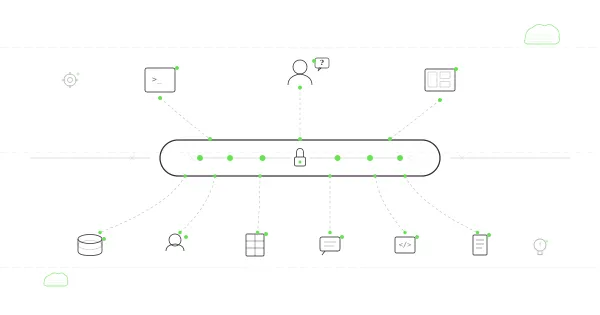
Google made data strength central at GML 2026. But it is not a setting you switch on. Here is what actually builds it: consent, server-side, and a warehouse.
Dara and Matthew unpack Google Cloud Next '26 and I/O '26: the Gemini Enterprise Agent Platform, Gemini 3.5 Flash, Omni, Antigravity 2.0 and generative AI search. Plus a breaking-news bulletin on Anthropic's new Fable model, and why agents are the headline but governance is the subplot.
Dara and Matthew cover frontier model updates, Mythos, Google I/O, and AI design tools before officially introducing SEAM - Measurelab's semantic governance layer that sits between LLMs and data sources to deliver consistent, audited answers.

Google's running two in parallel - Marketing and Cloud. You'll likely still be using both for the next few years. So here's how to work with them and make them your own. Three Google announcement events recently - Cloud Next in April, I/O on May 19-20, Google Marketing Live on May 20. The Marketing Live keynote actually overlapped with the second day of I/O, which struck me as not accidental - Gemini is running under all of it. And, in doing so, rebuilding your measurement stack. What Google
Martin Sahlen, CEO of Alvin AI, joins the Measure Pod to discuss automating BigQuery cost optimisation through billing model arbitrage, with no AI in the engine.
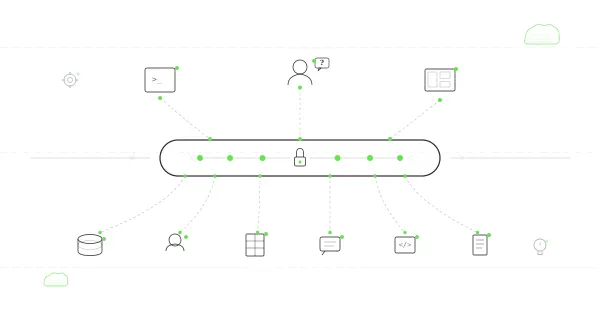
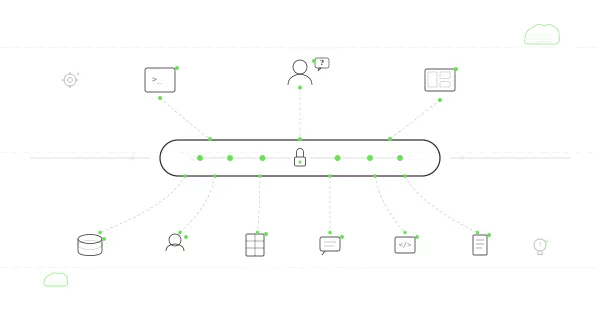
Someone in your organisation has already connected an AI agent to a live data source. Probably several people have. They've pointed Claude at HubSpot, asked it to pull numbers from Google Analytics, had it read a Jira board or reconcile figures across two systems. The data never moved. Nobody waited for a pipeline. Nobody asked the data team. They did this because it was easy. And people will always go where the friction is least. This is happening everywhere, across every function, in organis