The AI revolution already happened
AI's revolution is already here. We're too busy debating its future to harness the transformational power of today's models.
Matthew Hooson-
Insights
The latest news, provocative views and some handy how-tos from the world of data, analytics, cloud and AI.
Explore a topic across our insights
234 results · Page 2 of 13
AI's revolution is already here. We're too busy debating its future to harness the transformational power of today's models.

NL-SQL tools can transform how you query data - but only if your foundations are solid. Here's an honest look at what works and what doesn't.
At the start of the year, if you’d asked us whether Measurelab would be standing shoulder to shoulder with Europe’s biggest consultancies by September, we would've been surprised. Not because we don't believe in ourselves, but because these things feel so distant - until suddenly, they’re not. So, here it is: we’ve been awarded the Marketing Analytics Services Partner Specialisation in Google Cloud Partner Advantage. What’s the big deal? In Google’s own words (with the obligatory Zs): “Spec
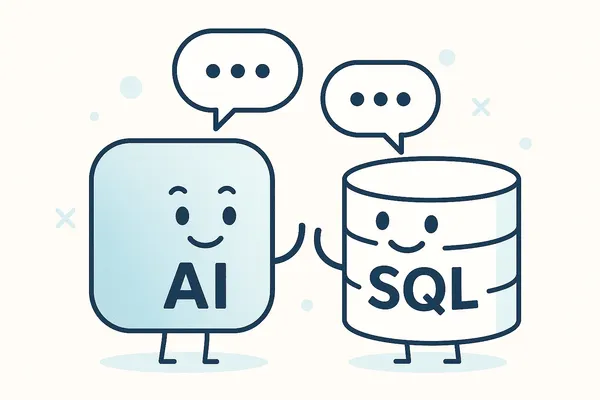
BigQuery just got a major upgrade, you can now plug directly into Vertex AI using the new AI.GENERATE function. Translation: your analytics data and generative AI are now best friends, and they’re hanging out right inside SQL. That opens up a whole world of new analysis options for GA4 data, but it also raises some questions: * How do you actually set it up? * What’s it good for (and when should you avoid it)? * Why would you batch the query? Let’s walk through it step by step. Step 1: H
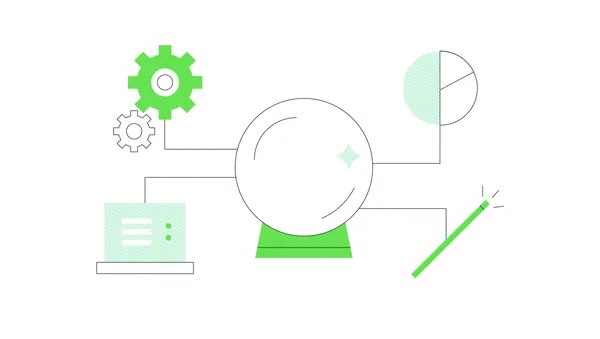
If you’d told me five years ago that I’d be forecasting product demand using a model trained on 100 billion time points… without writing a single line of ML code… I probably would’ve asked how many coffees you’d had that day ☕️ But its a brand new world. And it’s possible. Let me explain What is TimesFM? TimesFM is a new foundation model from Google, built specifically for time-series forecasting. Think of it like GPT for time, instead of predicting the next word in a sentence, it predicts t
Given in recognition of how we are “Shaping growth, innovation and competition in the modern agency world” - along with 24 other companies in the UK; shaking it up, doing it that little bit better every time. We are honoured to be part of this initiative at the IPA (Institute of Practitioners in Advertising) to recognise the efforts of smaller UK independents - who are redefining what it means to be an agency in today’s fast-evolving media and technology environment.
You’ve probably heard that AI is coming to make our lives easier, especially in tools like BigQuery. But here’s the thing: AI isn't magic. If you want it to be accurate and useful, you need to set it up for success. One of the best ways to do that? Improve the metadata in your BigQuery warehouse. Metadata is like the index or contents page in a book, it quickly tells you exactly what’s inside and where to find it. Creating clear metadata means AI can more easily understand your data warehouse

In our recent engagement with a client, we went on a journey to transform their data pipelines, tackling inefficiencies in performance and cost within their Google Cloud BigQuery environment. Our efforts culminated in a comprehensive optimisation strategy that used Dataform, improved SQL practices, and implemented tailored solutions for significant performance gains and cost savings. Here’s a deep dive into the highlights of our project. Identifying inefficiencies in BigQuery workflows We beg
Dataform is a powerful tool for managing your data workflows in a structured, version-controlled, and automated way. Whether you're a beginner or an experienced data engineer, Dataform simplifies SQL-based transformations while integrating seamlessly with Google BigQuery. Although this blog offers a basic introduction to Dataform's functionality, users can achieve significantly more with Dataform. From advanced scheduling, parameterised queries, and dependency management to complex data modelli
Google Analytics 4 (GA4) exports event data to BigQuery, enabling detailed user behavior analysis. However, GA4 batches events before sending them, making GA4 event sequencing in BigQuery more complex. Fortunately, three fields—batch_event_index, batch_ordering_id, and batch_page_id—help provide precise sequencing information. For a full schema of the GA4 export, head over to google documentation. This article breaks down these fields in a clear, practical way and shows how to use them togethe
BigQuery offers powerful scripting capabilities that can simplify complex workflows. In this post, we’ll explore two essential techniques: using IF...THEN...END IF for procedural control and leveraging the metadata in project.dataset.__TABLES__ to ensure your Google Analytics 4 (GA4) data is ready before running queries. These strategies help you avoid unnecessary processing, reduce costs, and improve efficiency in your data pipelines. 1. Leveraging IF...THEN...END IF for procedural logic Whi

Efficient data loading is crucial for managing and updating tables in Dataform. Various strategies exist to handle different use cases, including truncate and load, appending data, and leveraging incremental tables with unique keys. This blog explores these primary methods and more: Truncate and Load In this method, all existing records in the target table are deleted and replaced with a fresh table. This approach works well when a full table refresh is necessary or if managing slowly changin

Same same but different At the beginning of the year, I wasn't quite sure what Measurelab would look like by the end of 2024. Altman's assistants had just been unleashed. The robots were on the march. Would the analytics arena be conquered by AI? Would we all be replaced by intelligent agents? As it turns out, no. Things are pretty much the same - on the surface at least. And that's no bad thing. After the tumultuous ups and downs of a rollercoaster 2023, I'll take steady, deliberate progress

Managing scheduled queries in BigQuery often feels limiting — there’s no version control, no easy collaboration, and scaling can be difficult. If you’ve ever wondered how to make SQL workflows smoother, Dataform is your answer. In this post, I’ll show you how I migrated a BigQuery scheduled query to Dataform and how it transformed the way I manage my data pipelines. After all, we all want to know who’s been touching our queries, don’t we? Getting started in Dataform First thing you need to
Setting up a Dataform repository can be challenging without the right steps. Whether you’re new to Dataform or want to optimise your workflow, this guide will show you how to seamlessly connect it with GitHub and Google Cloud (GC). What is Dataform and why use it? Dataform is a powerful tool for managing version-controlled SQL workflows in a collaborative way. GC incorporates BigQuery and GitHub integration, providing an efficient way to organise and maintain complex data pipelines. Let’s bre

Offline event data import in Google Analytics 4 allows you to upload event data that was acquired outside of your website or app, such as in-store purchases, contact centre interactions, or CRM data. This can be critical for businesses seeking to bridge the gap between online and offline user actions, resulting in a more complete picture of customer behaviour. How to import offline event data into GA4 You can upload event data into GA4 through a process called Data Import. This can be done ma

Discover 'The Complexity Paradox': why seemingly simple tools like spreadsheets can lead to hidden complexity, while learning powerful tools like BigQuery and SQL can bring true simplicity and scalability to your data workflows.
Learn how Dataform can solve the challenges of outdated SQL, improving data reliability, scalability, and efficiency for marketing teams.